
Excellent for fresh characters.
Photographs capture color, growth habit, habitat, bruising, texture, and the appearance of a fresh fruiting body before those features disappear.
Essential—but finite.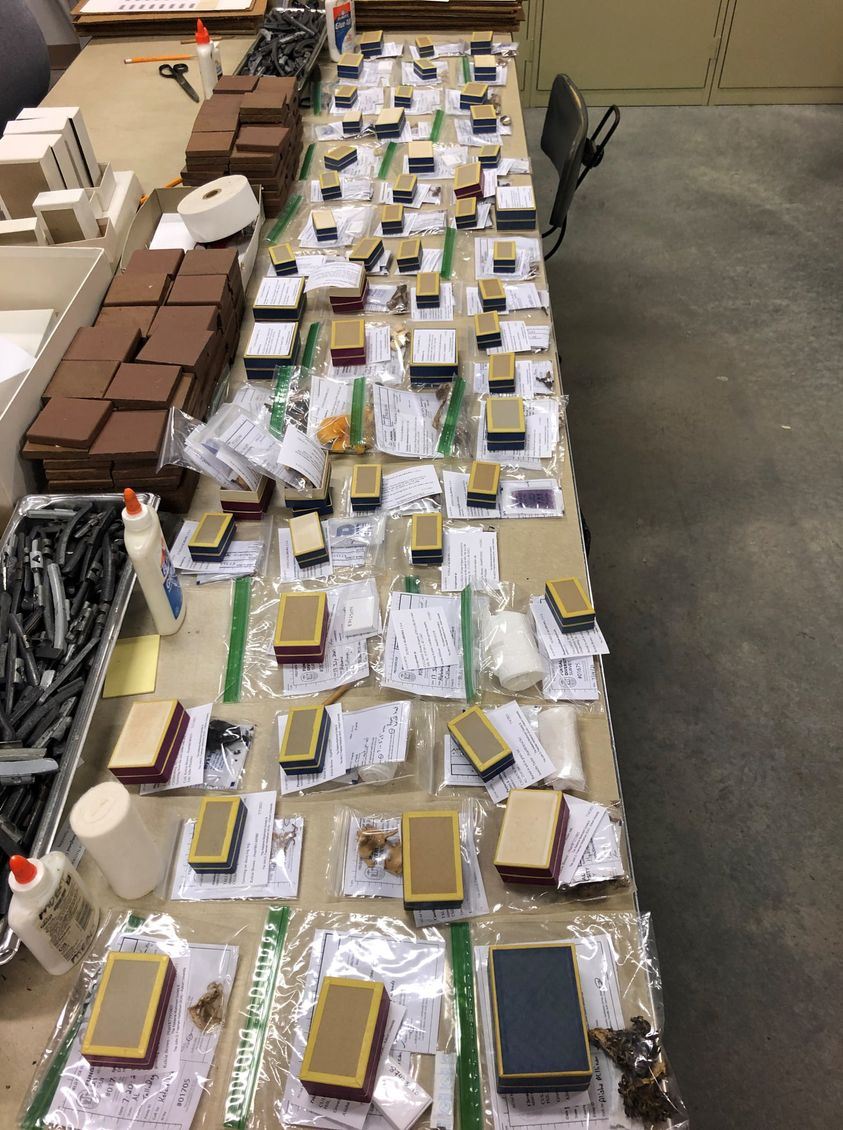
THE AMS HERBARIUM A permanent record of a temporary organism.Mushrooms may last only a few days in the field. A carefully documented and preserved specimen can remain useful for decades. WHAT IS A FUNGAL HERBARIUM? Think library—but the books are mushrooms.A herbarium is a collection of preserved biological specimens maintained so they can be examined again in the future. Although the word is most often associated with dried plants, herbaria also preserve fungi. Instead of pressing a mushroom flat like a leaf, fungal specimens are typically dried thoroughly and stored together with the information that gives the collection scientific meaning. That preserved specimen becomes evidence: this fungus occurred at this place, on this date, in this habitat, collected by this person. WHY KEEP THE MUSHROOM? A photograph records appearance. A specimen preserves evidence.Excellent for fresh characters.Photographs capture color, growth habit, habitat, bruising, texture, and the appearance of a fresh fruiting body before those features disappear. Essential—but finite.Preserve the context.Date, location, substrate, nearby trees, odor, staining, collector observations, and other details cannot be reconstructed reliably after the fact. Context makes the specimen meaningful.Can be examined again.Microscopic structures, tissue, DNA, morphology, and other physical characters remain available for future study. The organism is still there.
BEFORE IT DRIES Record the things preservation will change.Drying preserves a specimen, but it also changes it. Good documentation captures the mushroom while it is still fresh. Colors may fade. Tissue may stop staining. Odors disappear. Caps flatten. Gills and pores change shape. Delicate veils or surface textures may become difficult to interpret. That is why field photographs and fresh notes belong with the dried specimen rather than being treated as separate records. FROM FRESH TO PERMANENT How a mushroom becomes a voucher specimen.CollectChoose a representative specimen and preserve the structures needed for identification, including the stem base when relevant. PhotographDocument the mushroom in habitat and photograph the cap, underside, stem, base, sectioned flesh, and other useful features while fresh. DescribeRecord location, date, habitat, substrate, associated trees, odor, staining, texture, and other characters that may not survive drying. DryRemove moisture thoroughly so the fungal material becomes stable enough for long-term storage rather than decomposing. LabelKeep the specimen permanently tied to the collection data. An unlabeled mushroom is dramatically less useful scientifically. PreserveStore the dried material so it can be located, examined, compared, sampled, and reidentified in the future. 
COLLECTION DATA The label is part of the specimen.A dried fungus without collection information may still be interesting to look at, but much of its scientific value has been lost. The record associated with a voucher provides the information needed to understand where the organism came from and to connect later observations or analyses back to the original collection.
01
Collector
02
Date
03
Location
04
Habitat & substrate
05
Associated trees or plants
06
Field observations
07
Photographs
08
Identification
YEARS LATER The most important identification may not be the first one.Scientific names change because our understanding changes. A specimen collected under one name may later turn out to belong to a newly recognized species, a different genus, or a complex of several similar organisms. If the physical voucher still exists, another mycologist can examine it again rather than simply trusting the original identification. That ability to revisit a collection is one of the reasons natural-history collections remain valuable long after they were assembled. THE SPECIMEN IS NOT FINISHED What can someone do with it later?Reexamine structuresRevisit cap, stem, gill, pore, tissue, veil, or other preserved characteristics. Look smallerExamine spores, cystidia, hyphae, and microscopic structures that may be essential to identification. Sequence tissueGenetic material can provide another line of evidence and connect collections to related fungi elsewhere. Apply new knowledgeReidentify older material as species concepts and scientific classifications improve. Verify a rangeA voucher can support evidence that a species was present in a particular county, region, or habitat. Ask questions we haven't thought of yetPreserved collections can become useful for future research that was never imagined when the specimen was gathered. WORTH SAVING Some collections raise better questions than answers.Unusual morphology, uncertain identification, odd habitat, unexpected geography, or simply a beautiful example of a poorly documented fungus can make a specimen worth preserving. 
DIFFICULT GROUPS
CortinariusSome enormous genera contain many similar species where a preserved specimen can support microscopy or later sequencing. 
UNUSUAL ECOLOGY
Cordyceps & alliesHost relationships can be important pieces of biological information worth preserving alongside the fungus itself. 
EASY TO OVERLOOK
Small fungi matter.Scientific interest is not proportional to size. Tiny fruiting bodies can represent poorly documented pieces of Alabama's fungal diversity. SHOULD THIS BE VOUCHERED? Not every mushroom needs a permanent home.
An unusual or unfamiliar fungus
Especially when the identification remains uncertain after normal field examination.
A potentially important geographic record
Something that appears uncommon, out of range, or poorly represented in Alabama records.
A specimen selected for sequencing
Physical material should remain tied to the sequence and the original collection data.
A useful research or teaching collection
Particularly when it illustrates important structures, ecology, or taxonomic characters.
Another ordinary specimen of a very common fungus
If the species is already well represented and the collection adds no useful information, a good observation may be enough. 
PART OF A BIGGER RECORD The herbarium is where AFDP observations become permanent.The Alabama Fungal Diversity Project connects field observations, photographs, identification work, selected voucher specimens, and genetic data into a more complete picture of the state's fungi. A distribution point on a map becomes considerably stronger when the physical organism behind that record can still be examined. Explore the AFDPFOUND SOMETHING INTERESTING? Document it before you dry it.You do not need to know the final species name before making a valuable collection. Photograph it thoroughly, record where and how it was growing, preserve the entire specimen when practical, and keep your notes connected to the collection. If you think you have found something unusual or worth preserving, bring it to an AMS event or contact us. Tell us what you found →COLLECT WITH PURPOSE The mushroom disappears. The record doesn't have to. |